Angkor Wat is the world’s largest religious monument, built in the early 12th century by King Suryavarman II as a Hindu temple dedicated to Vishnu, later transformed into a Buddhist site. Today, it remains Cambodia’s most iconic landmark, a UNESCO World Heritage Site, and a living place of worship.
🏛️ Key Facts
- Location: Siem Reap, Cambodia
- Built: Between 1113–1150 CE under King Suryavarman II
- Size: 162.6 hectares (402 acres) – the largest temple complex in the world
- Height: Central tower rises 65 m (213 ft)
- Religion: Originally Hindu (dedicated to Vishnu), later Theravāda Buddhist
- Symbolism: Designed to represent Mount Meru, the cosmic mountain in Hindu-Buddhist cosmology
- Orientation: Unique west-facing layout, unlike most Angkor temples
🌍 Cultural & Historical Significance
- National Symbol: Appears on Cambodia’s flag and currency.
- UNESCO World Heritage Site: Listed in 1992, part of the Angkor Archaeological Park covering 400 km².
- Continuous Worship: Unlike many Angkor temples, Angkor Wat has remained an active religious site for centuries.
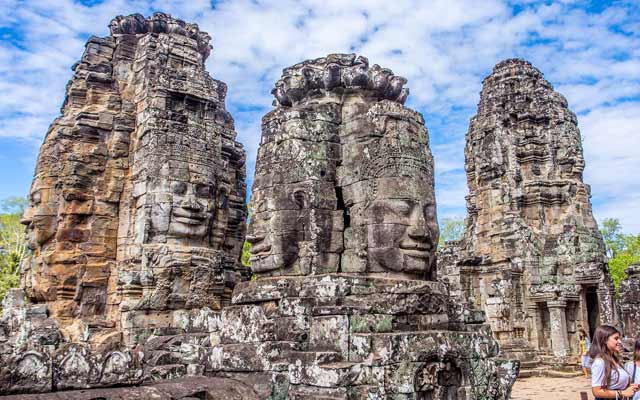
- Architecture: Combines temple-mountain and galleried temple styles, with extensive bas-reliefs depicting Hindu epics like the Ramayana and Mahabharata.
🕐 Visiting Information
- Opening Hours: 5:00 AM – 5:30 PM
- Tickets: Must be purchased at the Angkor Ticket Office (Road 60, 4 km from Siem Reap center).
- 1-day pass: $37
- 3-day pass: $62
- 7-day pass: $72
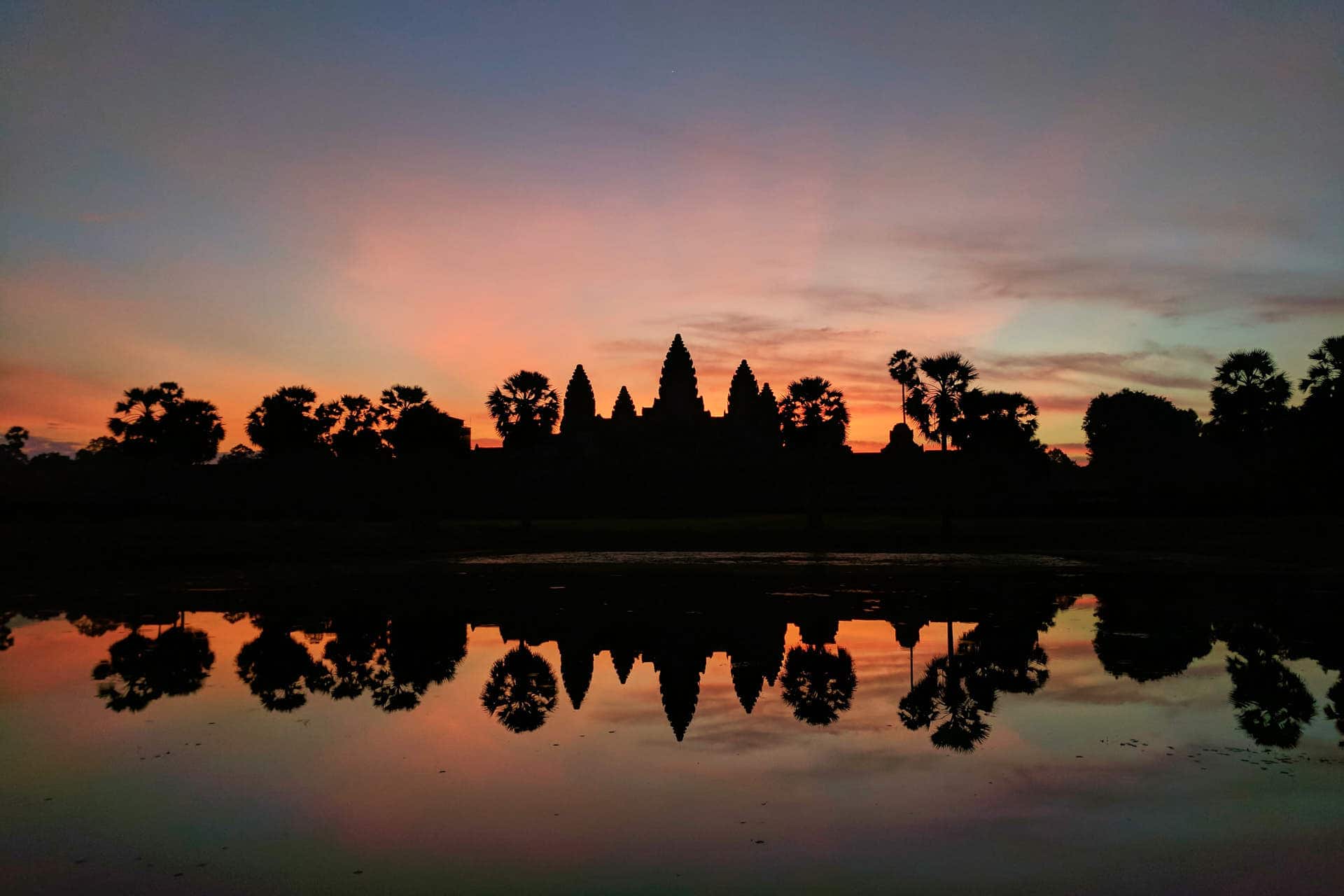
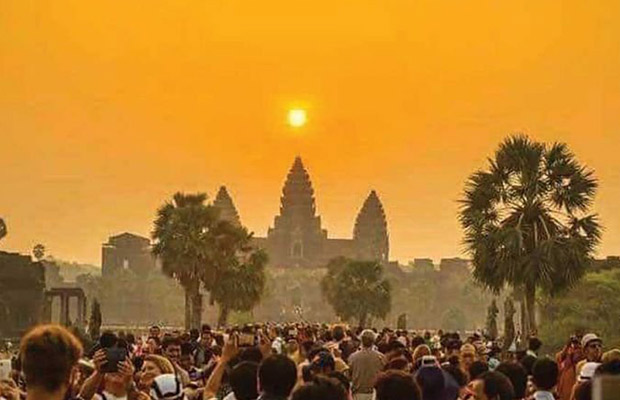
- Best Time to Visit: Sunrise (iconic view, but crowded) or sunset (less crowded, golden light).
✨ Highlights to See
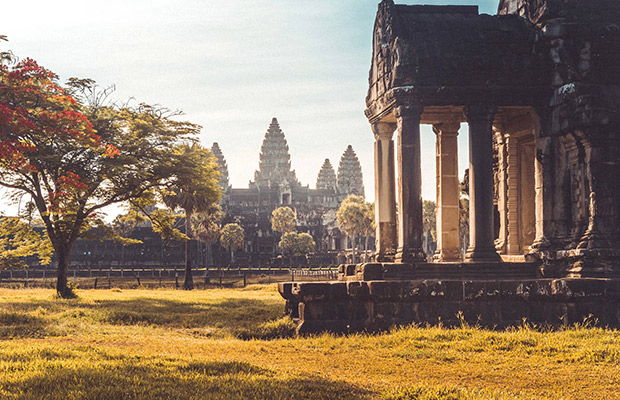
- Central Quincunx of Towers: Symbolizing Mount Meru’s peaks.
- Bas-reliefs: Over 800 meters of carvings, including the Churning of the Ocean of Milk.
- Moat & Causeway: 3.6 km long moat surrounding the temple.
- Devatas (Apsaras): Thousands of celestial dancers carved into walls.
⚠️ Tips & Risks
- Crowds: Sunrise is extremely busy—consider exploring smaller temples first.
- Heat: Carry water, hat, and sunscreen; midday temperatures can exceed 35°C.
- Dress Code: Modest clothing required (shoulders and knees covered).
- Scams: Only buy tickets at the official Angkor Ticket Office; avoid street sellers.